
Did the October 10 Crash Permanently Reshape Crypto Liquidity?
Crypto market liquidity entered a new phase after the October 10, 2025 crash. What initially appeared to be a sharp but isolated shock has instead developed into a more persistent deterioration in market depth, with major assets failing to recover their pre-crash liquidity conditions. Against this backdrop, comparing U.S. and offshore markets provides a useful lens to assess where liquidity remains deepest.
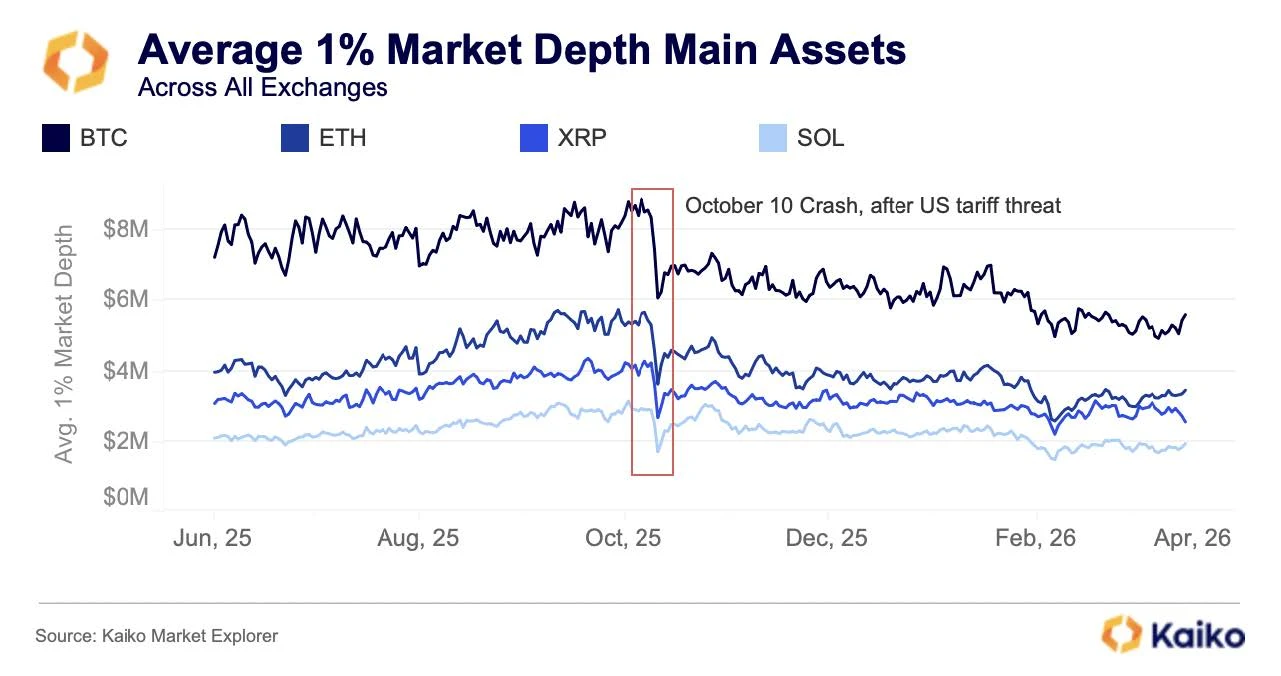
- BTC liquidity never recovered after the Oct. 10 crash, with avg. 1% depth dropping from ≈$8M to ≈$3M, then stabilizing at ≈$6M.
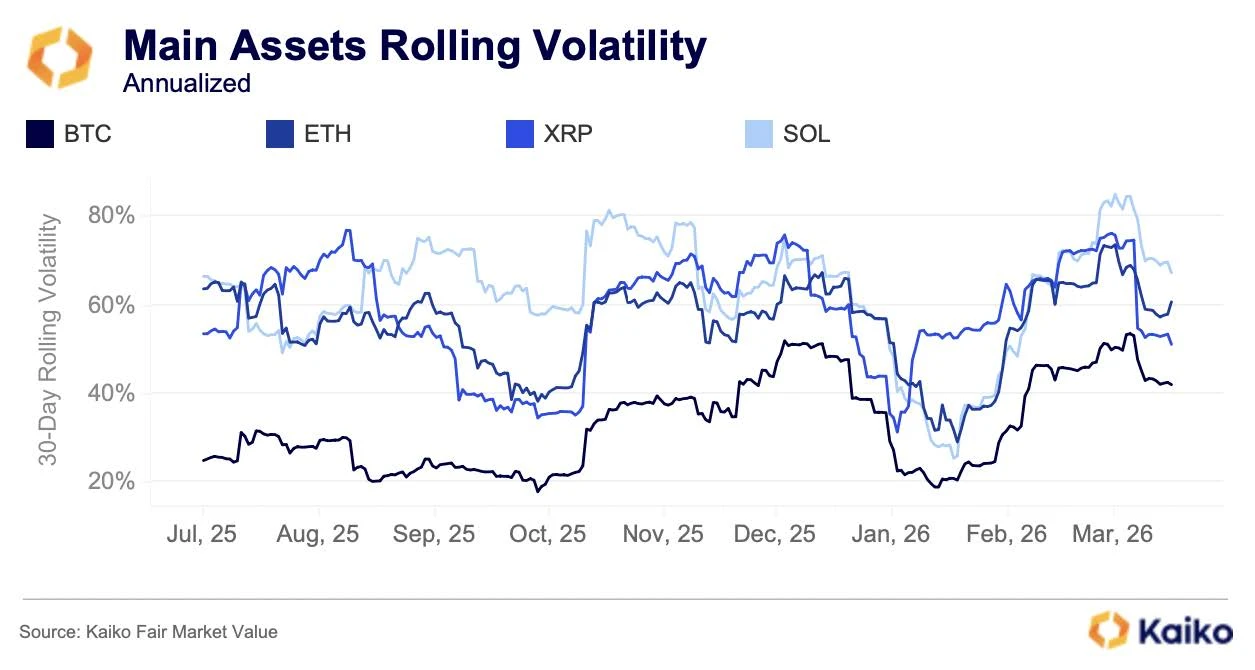
- Lower liquidity has coincided with a volatility spike, above 60% for ETH and SOL.
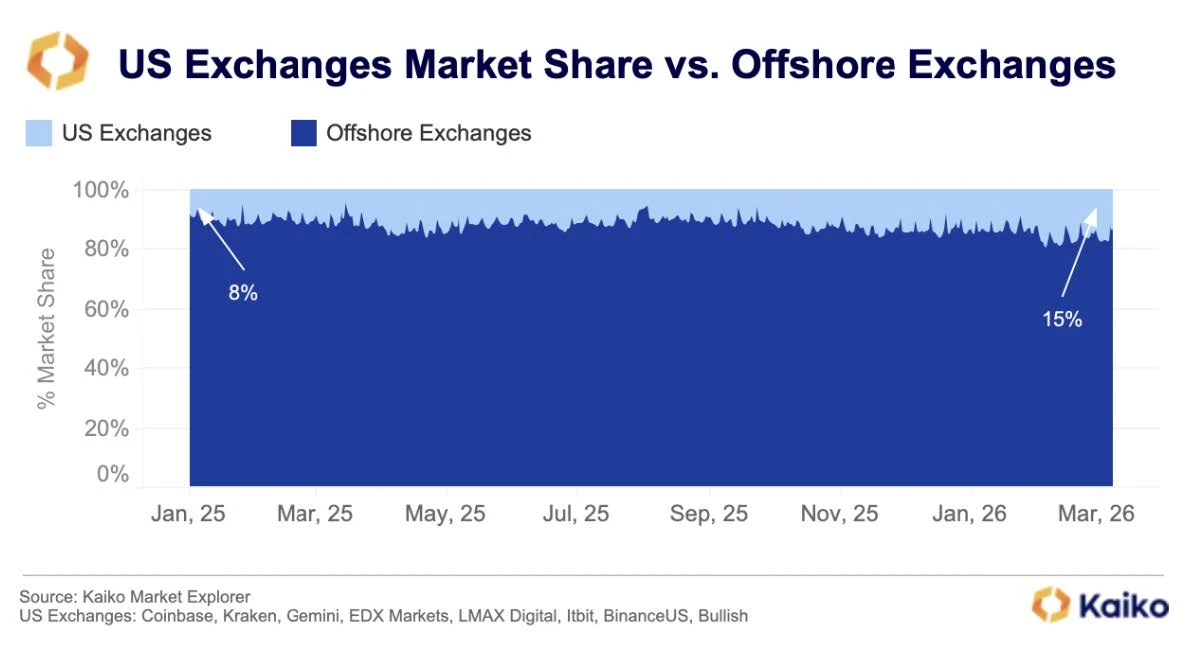
- Offshore exchanges still dominate volumes, but U.S. platforms now combine rising share, 8% to 15%, with deeper liquidity.
What Has Changed in Crypto Liquidity Since the October 10 Crash?
Throughout much of 2025, liquidity in the crypto markets reached elevated levels, as reflected in market depth for major assets. This phase reflected a favorable market environment, where order books gradually strengthened and trading volume absorption capacity improved. In this context, the market appeared to be on a solid expansionary trajectory, supported by good liquidity conditions.
The crash on October 10, which followed the American threat to impose additional tariffs on Chinese imports, marked a major turning point in this trajectory. The shock triggered a sharp deterioration in liquidity, bringing an end to the expansionary momentum observed since the beginning of 2025. The subsequent contraction in market depth reflects a rapid withdrawal of liquidity-providing capacity, against a backdrop of a downturn in market sentiment and rising risk aversion.
Since then, the market’s major assets have been unable to regain their pre-crash liquidity levels. Not only has the rebound failed to materialize, but liquidity indicators have continued to trend downward, signaling persistent fragility in the market structure. This inability to return to pre-crash levels suggests that the observed trend is not merely a temporary adjustment, but may reflect a deeper and more structural shift.
Moreover, this contraction was not limited to the immediate aftermath of the October shock. It persisted and then intensified in early 2026, confirming that the market had entered a sustained downturn. The announcement of the appointment of the new Fed chairman served as an additional catalyst, triggering a further decline in liquidity across the broader crypto market. This episode reinforced market participants’ caution and contributed to prolonging a market environment characterized by tighter liquidity conditions.
By focusing specifically on the 10/10 crash for BTC, using hourly data, we can more accurately measure the magnitude of the impact on market liquidity. Before the shock, the average 1% market depth typically fluctuated between $8 million and $10 million. Within a few hours, it plummeted to nearly $3 million under heavy selling pressure, a drop of approximately 60%, illustrating the severity of the intraday stress experienced by the market.
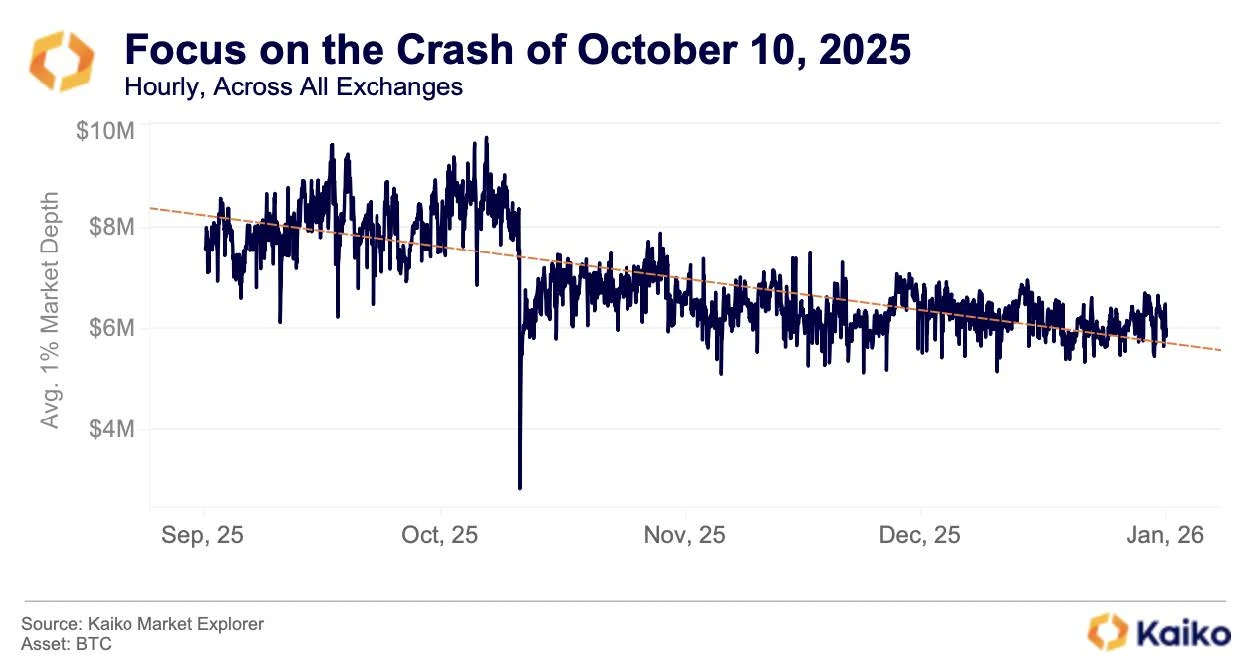
This decline did not subside after the volatile episode. Liquidity only partially recovered, stabilizing in a lower range, around $6 million, well below the levels observed before the crash. The downward trend that continued into the following weeks thus confirmed that October 10 was not simply a one-off event, but rather a tipping point towards a weaker and more fragile liquidity environment.
Liquidity has continued to deteriorate, driving a sharp increase in volatility across major assets. BTC, ETH, XRP, and SOL have all experienced periods of elevated tension, with particularly high annualized volatility levels in the recent period. This movement is consistent with the weakening of liquidity conditions observed since the October shock, as a shallower market is inherently more sensitive to price fluctuations.
Thus, the contraction in liquidity has not only weakened the market structure, but has also contributed to amplifying price movements. The combination of declining market depth and volatility returning to extreme levels confirms the market has moved into a more fragile state, where major assets remain exposed to more abrupt fluctuations. ETH and SOL exhibit volatility exceeding 60%, while BTC and XRP experience volatility between 40% and 50%.
Offshore Volume, Onshore Depth, Who Really Leads Crypto Liquidity?
We now examine where this liquidity is actually concentrated. In an ecosystem where the United States plays an increasingly structural role, driven by the progressive institutionalization of the market, the weight of its major platforms, and a more favorable political environment, a comparison between American and offshore exchanges provides essential insights.
From the perspective of spot trading volume, offshore platforms maintain a clear dominance throughout the period observed. Their market share remains largely dominant, confirming their central role in shaping overall activity, largely due to the size and number of their largest international players. However, this dominance should not obscure the gradual evolution of the American segment.
Indeed, U.S. exchanges have seen their market share increase noticeably over the period. While they represented a relatively small portion of trading volume at the beginning of 2025, around 8%, their share has gradually grown to reach a higher level today, around 15%. The trading volume structure does not indicate a reversal of leadership between the United States and offshore markets, but rather a gradual rise in the weight of U.S. exchanges.
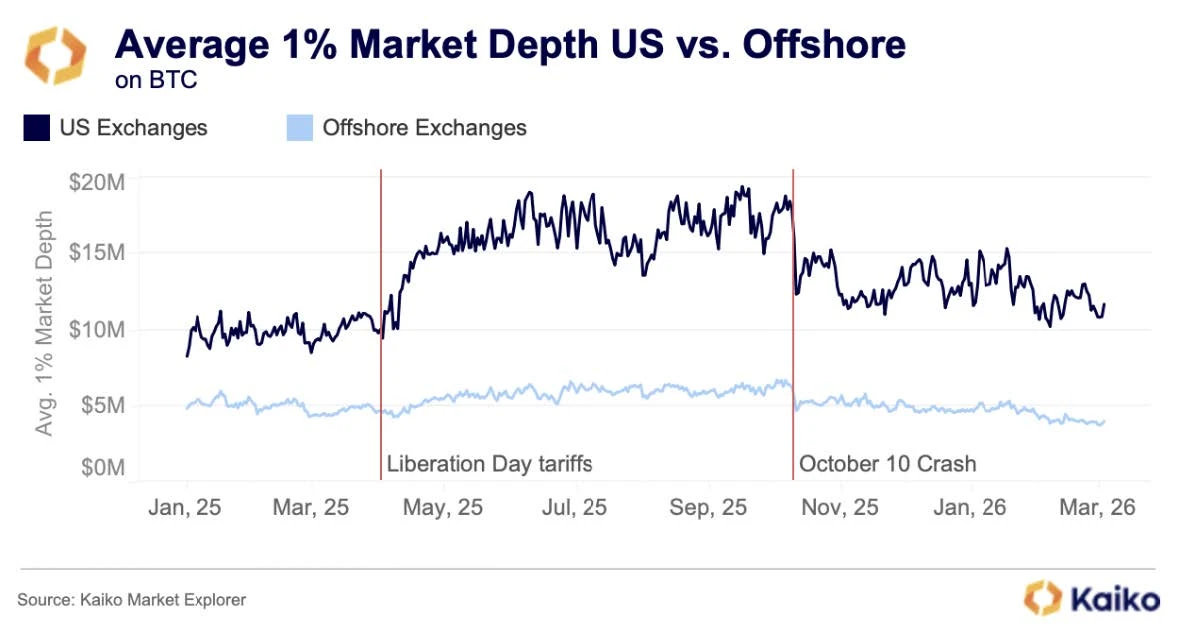
Extending the comparison between U.S. and offshore platforms, a notable contrast emerges between trading volume and market depth. While U.S. exchanges account for a smaller share of trading volume than their offshore counterparts, their liquidity is significantly higher. In 2025, the BTC average 1% market depth on U.S. platforms typically ranges from $10 million to $20 million, compared to levels closer to $5 million for offshore exchanges.
This distinction is important because market depth offers a different perspective than trading volume. Whereas trading volume indicates the intensity of activity, market depth measures a market's capacity to absorb large orders without causing excessive price fluctuations. Higher depth therefore reflects a more robust execution environment, with denser order books and a greater capacity to accommodate institutional flows.
Offshore platforms still dominate in activity, while U.S. exchanges stand out with a deeper market structure and, as such, are potentially more resilient.
About the Author
Article authored by Thomas Probst, Research Analyst, Kaiko
- Market
- Liquidity

