
Why Bitcoin Works as Loan Collateral
Bitcoin has dipped 47 percent from its October highs of USD 126k to around USD 70k in March this year. Gold’s outperformance over the same period has invited fresh scepticism about Bitcoin’s digital gold appeal and the regulatory backdrop remains uncertain with the CLARITY Act and Bitcoin Strategic Reserve bill stalled in the US senate. The Bitcoin lending market is being stress-tested but continues to show resilience, nonetheless.
The value of outstanding Bitcoin-backed loans has grown over the last year, as leveraging credit facilities to unlock liquidity without selling underlying Bitcoin remains an appealing option for entities that have diversified a portion of their assets into crypto and intend to keep exposure long-term.
Many platform figures support the growth. Ledn has originated USD 10.9B in Bitcoin-backed loans to date (Q3 2025 nearly matched the entire prior year) and in 2024 Ledn issued the industry’s first Bitcoin-backed syndicate loan, while Coinbase’s on-chain lending product through Morpho Labs is approaching USD 2B in Bitcoin-backed loan originations.
Coinbase Onchain Borrow Originations Cbbtc/Usdc (Daily)
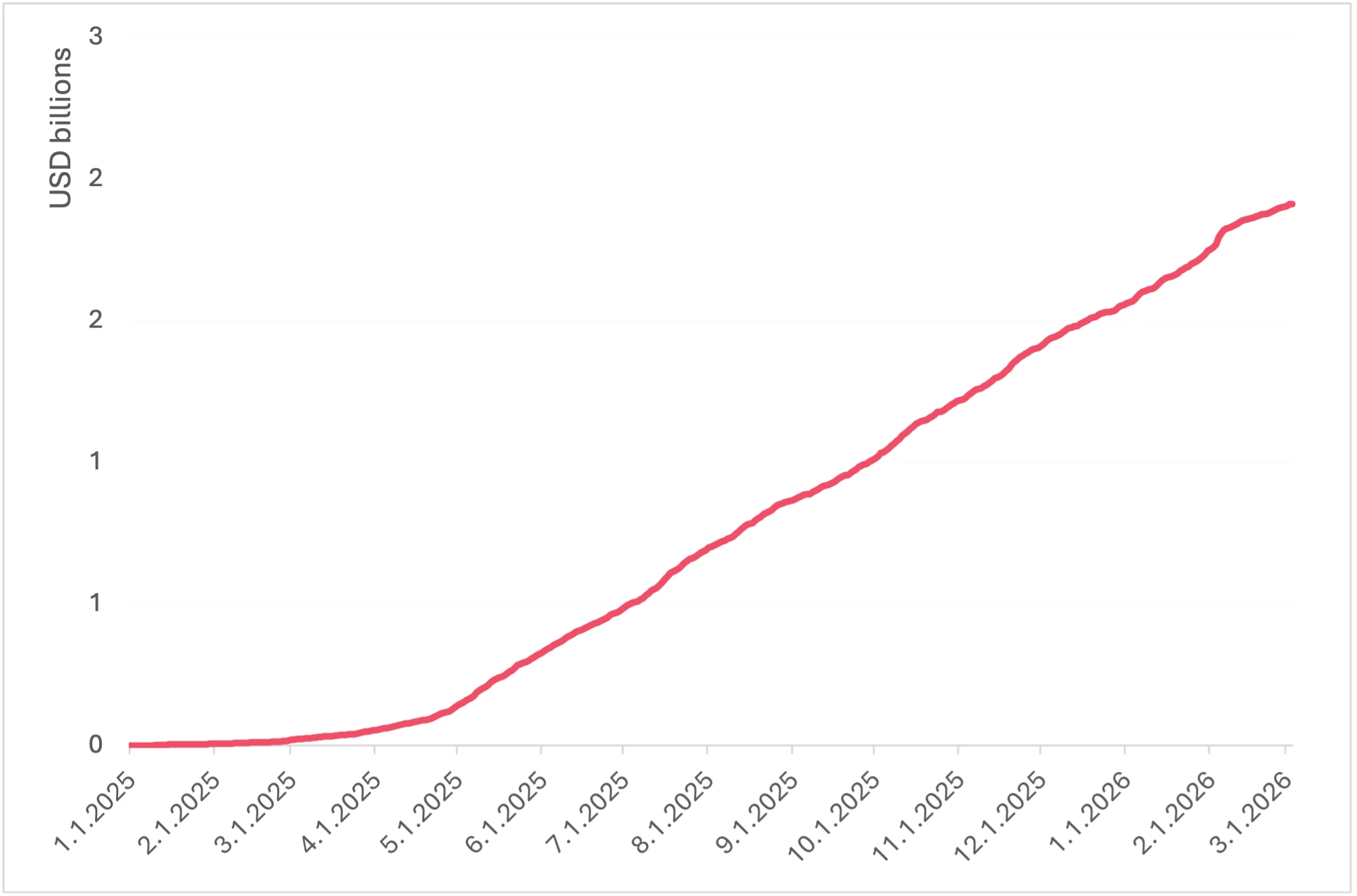
Source: Dune, cbBTC/USDC represents 86 percent of Coinbase’s Morpho lending activity
Why Does Bitcoin Work Well as Collateral?
Unlike corporate bonds or structured products, Bitcoin carries no issuer or credit risk. There is no balance sheet to deteriorate, no management team or dependencies like refinancing risks.
Its fixed supply of 21 million coins is verifiable on-chain, and because it trades continuously across global venues, lenders can verify collateral value in real-time instead of relying on third-party valuations.
Depth in the spot and derivatives markets means large positions can be hedged or liquidated without severe slippage. And compared with traditional collateral, Bitcoin can be transferred and settled rapidly without reliance on intermediaries or traditional market hours.
Admittedly, price swings can be more dramatic than traditional collateral, which is why conservative structuring is now common practice. Conservative loan-to-value (LTV) ratios, frequence margining and predefined liquidation triggers reduce lender exposure.
And although Bitcoin may have phases of hefty price swings, its volatility has been in a structural decline over the last decade, which strengthens its case as collateral for those willing to look past the short-term drawdowns.
Bitcoin 3-Month Volatility
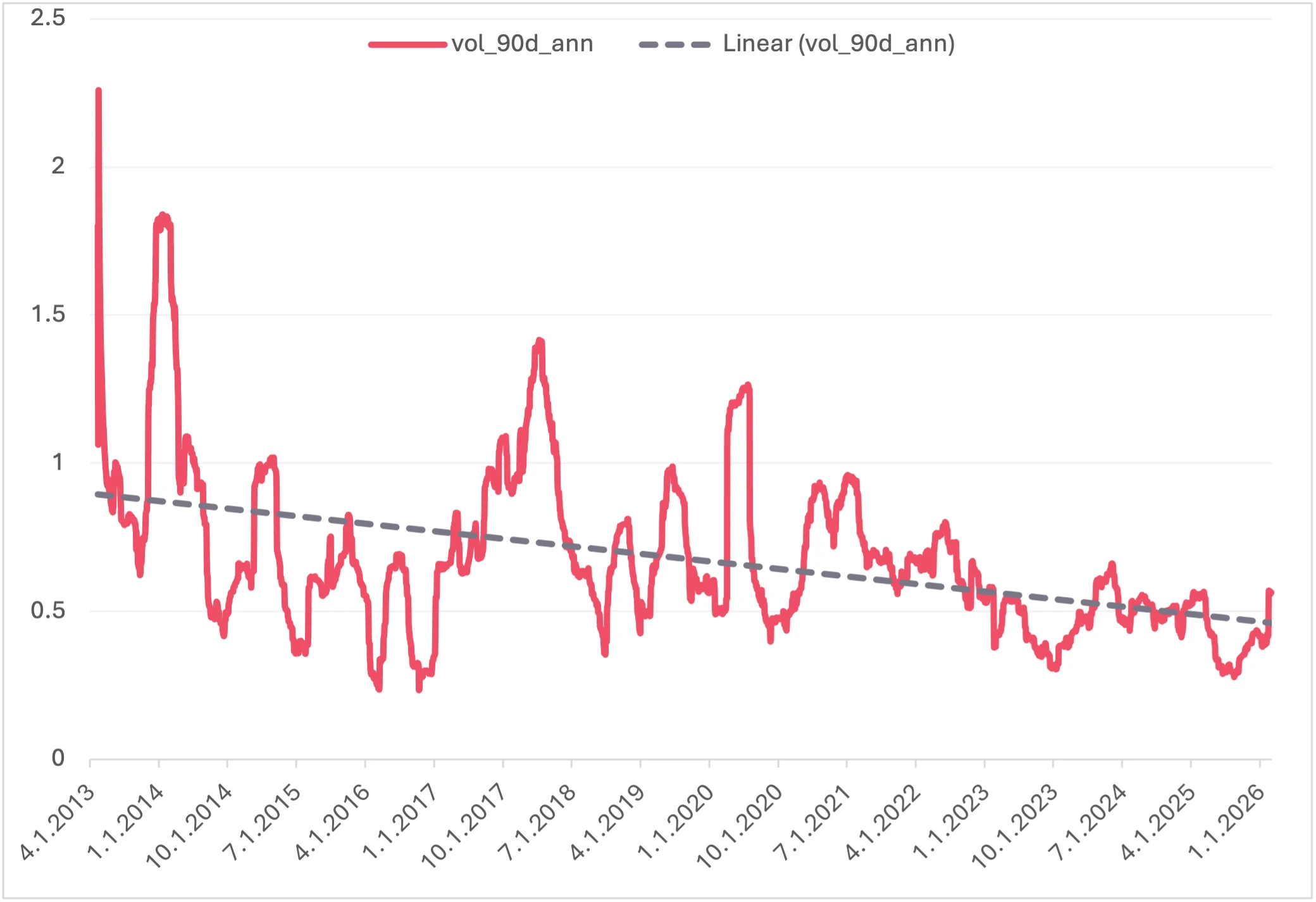
Source: CoinMarketCap, rolling vol 90d
Lessons From 2021-22?
The last major stress test to the lending market came in 2021-2022, but the collapse was in fact not driven by Bitcoin’s volatility. Blockchain protocol Terra and its algorithmic stablecoin LUNA’s implosion in May 2022 exposed hedge fund Three Arrows Capital (3AC), whose default left BlockFi, Celsius, Genesis and Voyager holding worthless uncollateralised loans. Voyager and Celsius filed for bankruptcy within days of each other in July, and FTX’s November collapse delivered the last blow to BlockFi, which had taken a USD 400M credit facility from the exchange earlier that year.
Price volatility was the “convenient” explanation, but the real problem was excessive rehypothecation, inadequate margin and liquidation processes and maturity mismatches between assets and liabilities.
CeFi lenders had extended uncollateralised loans to the same handful of counterparties, often redeploying customer collateral to generate additional yield while funding illiquid positions with deposits that could be withdrawn on demand. When sentiment flipped, depositors withdrew funds rapidly and lenders were forced to either liquidate at a loss or suspend withdrawals entirely.
LTV Ratios were not monitored in real-time, margin calls were slow and manual, and liquidation triggers were inconsistently enforced with too many exceptions granted to large borrowers. What could have been manageable drawdown became insolvency events.
The irony, however, was that DeFi protocols simply liquidated borrowers when the thresholds were breached and continued operating as normal. They worked as intended, and they worked well.
Why Bitcoin Lending Is a Maturing Market
The market feels less chaotic this time around, thanks to a more robust lending infrastructure and a shift in investor sentiment from yield-chasing euphoria to capital protection.
Loans are now typically over-collateralised, with LTV ratios in the 40-60 percent range. Tighter risk controls and stress-tested margining acts as volatility buffer, reducing lender exposure to sharp market moves. There has been a clear shift toward strict segregation of client collateral, often held with regulated custodians, including a clear veto of rehypothecation.
Many custodied loan structures limit or even prohibit lender from redeploying posted Bitcoin, which reduces counterparty contagion risk. Cold storage and bankruptcy-remote structures are also increasingly preferred.
But borrowers and the sector as a whole should still be aware of the operational and legal risks, from custodian failures to on-chain vulnerabilities and liquidity risk during sharp drawdowns. Not to mention capital treatment for banks accepting crypto collateral and cross-border enforceability claims too.
The “not your keys, not your coins” ethos is still an importance topic within the Bitcoin community. But while self-custody eliminates intermediary risk, large-scale lending introduces unavoidable trade-offs between legally enforceable collateral rights and complete financial sovereignty.
Adoption Trends Continue to Accelerate
Lending platforms, like Aave, Maple Finance and Ledn proved that crypto-backed lending could operate at scale through code-based rules and real-time, transparent collateral monitoring to manage risk. Their success has attracted major global banks and financial institutions to the space, offering Bitcoin exposure via spot trading desks, regulated custody and exchange traded funds (ETFs).
The launch of US spot Bitcoin ETFs in early 2024 was widely interpreted as a turning point for institutional adoption. They introduced operational and legal certainty that banks, asset managers and regulators readily understand. That comfort has since extended to Bitcoin’s use as loan collateral.
JP Morgan, whose CEO once dismissed Bitcoin as “worthless”, has evolved from scepticism to engagement, initially around ETFs but now increasingly toward direct exposure to Bitcoin and its usage as collateral for institutional clients. Bank of America now allows wealth managers to recommend Bitcoin allocations (1-4 percent) to clients, and lending products could follow as positions grow. Others include Goldman Sachs, BNY Mellon, Wells Fargo and Citigroup, whereas the Commodity Futures Trading Commission (CFCT) recently launched a pilot allowing Bitcoin (and Etheruem and USDC) to be used as collateral in US derivatives markets.
Meanwhile, Ledn recently sold nearly USD 200M in securitised bonds backed by Bitcoin-linked loans (the first of its kind). Blockrise secured a MiCAR licence and 21bitcoin piloted the EU’s first Bitcoin lending product. Sberbank in Russia announced it will accept Bitcoin as collateral and Argentina’s second largest crypto exchange launched the first Bitcoin-backed Visa credit card.
Market Outlook
Bitcoin is unlikely to revert to being a high-growth, high-yield speculative asset. Its future appears more measured and durable. This comes at a time when macro and geopolitical uncertainties, delayed rate cuts and volatility among many asset classes have engendered increasingly cautious sentiment among investors. They are now more prone to view Bitcoin through the lens of capital protection than quick financial gain.
The Bitcoin lending market allows treasury optimisation, access to working capital, portfolio diversification and other investment opportunities without liquidating Bitcoin. It is likely to see steady expansion as it attracts professional investors and institutions who understand that passively holding Bitcoin may be strategically sound but financially inefficient.
About the Author
Article authored by Lucas Schweiger, Lead Crypto Asset Ecosystem Research, Sygnum Bank AG
- Bitcoin
- Lending
Recommended
-

- Cryptoassets
- Bitcoin
- Blockchain
- DeFi
- Smart Contracts
Open Access Blockchain Courses
November 16, 2022 -

- Altcoins
- Blockchain
- Bitcoin
- Regulation
- Infrastructure
- Memecoins
2024: A Transformative Year for Crypto
December 19, 2024 -

- Bitcoin
- Digital Gold
Bitcoin: A currency for a crisis?
April 21, 2020


